


Is Wood Cheaper Than Smokeless Coal? Cost, Heat Output and Efficiency Compared
If you heat your home with a wood-burning stove or multi-fuel stove, you may have wondered whether kiln-dried logs or smokeless coal offer better value for money.
The answer depends on the price you pay, the type of fuel you choose, how efficiently your appliance burns it and how much usable heat you get from each purchase.
For many households, buying firewood in larger quantities can help reduce the cost per unit of fuel. However, smokeless coal can contain more energy per kilogram than wood, so comparing the price per bag alone does not tell the whole story.
In this guide, we compare kiln-dried logs and smokeless coal to help you understand the differences in cost, heat output, burning characteristics and environmental impact.
At Green Olive Firewood, we specialise in British kiln-dried logs, helping households choose quality firewood for their wood-burning stoves and open fires.
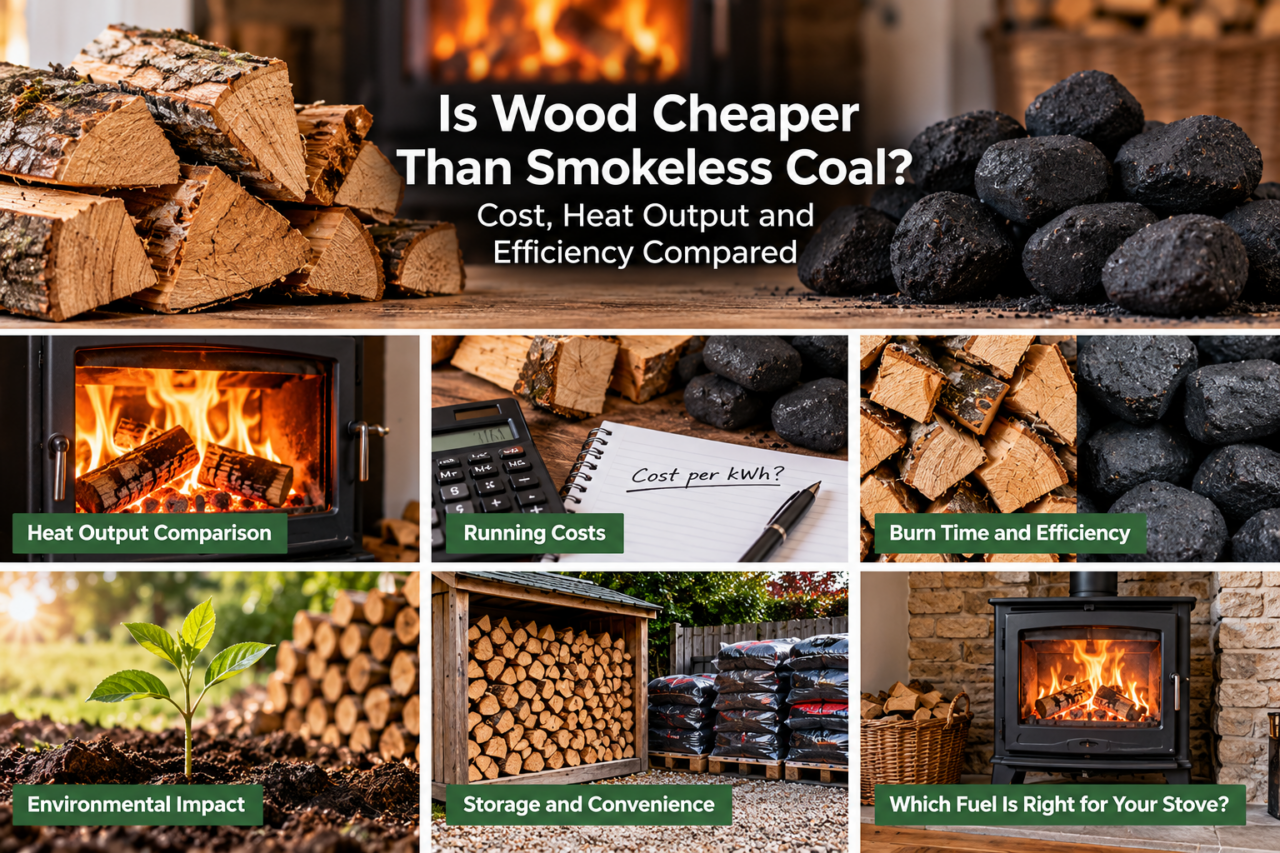
Is Wood Cheaper Than Smokeless Coal?
Wood can offer competitive value, but neither fuel is always cheaper. The best option depends on the cost of the fuel, its energy content, the efficiency of your appliance and the amount of heat you need.
Kiln-dried logs are sold in different quantities, from smaller nets to larger bulk bags. Buying a larger quantity may reduce the price per unit of wood, particularly if you have enough space to store it properly.
Smokeless coal is available in different manufactured and natural fuel types, each with its own price and energy characteristics.
To compare the two fairly, consider:
The total price, including delivery.
The weight or volume of fuel supplied.
The energy content of the fuel.
The efficiency of your stove or appliance.
How much usable heat you get from each purchase.
Storage requirements and the convenience of handling the fuel.
The cheapest bag is not necessarily the cheapest way to heat your home.
1. Kiln-Dried Logs vs Smokeless Coal: At a Glance
| Feature | Kiln-dried logs | Smokeless coal |
| Fuel type | Renewable biomass when sourced sustainably | Mineral or manufactured solid fuel, depending on product |
| Energy per kilogram | Generally lower than coal because of wood’s composition and residual moisture | Generally higher, depending on the fuel |
| Lighting | Dry logs can be straightforward to light with suitable kindling | Depends on the type of fuel and appliance |
| Burning characteristics | Depends on wood species, log size, moisture and airflow | Depends on the specific fuel and appliance |
| Storage | Requires a dry, ventilated space | Requires suitable dry fuel storage |
| Price comparison | Best assessed by quantity and usable heat | Best assessed by weight, energy content and usable heat |
| Appliance suitability | Must be approved for the appliance | Must be approved for the appliance |
| Environmental considerations | Depends on sourcing, moisture, combustion and emissions | Depends on fuel type, production and combustion emissions |
Neither fuel is automatically the better choice in every situation. The most suitable option depends on your heating requirements, your appliance and the fuel available to you.
2. Which Fuel Produces More Heat?
One of the main differences between wood and coal is their energy content.
Coal-based fuels generally contain more energy per kilogram than firewood. Wood contains natural moisture even after drying, and its energy content varies according to the species, moisture level and condition of the logs.
However, the energy contained in the fuel is only part of the calculation. Your appliance determines how efficiently that energy is converted into useful heat.
For example, a suitable modern stove operated correctly may use fuel more effectively than an inefficient open fire. Airflow, maintenance, the condition of the chimney and the way the fire is managed also affect performance.
When comparing fuels, look at the energy content and the efficiency of the appliance together rather than assuming that the fuel with the highest energy content will always be the cheapest to use.
3. How to Compare the Cost of Wood and Coal Fairly
The most useful comparison is the cost of producing a given amount of usable heat.
A simple method is to divide the total fuel cost by the amount of useful heat the fuel provides after allowing for appliance efficiency.
For firewood, this means considering the weight, moisture content and energy content of the logs. For smokeless coal, you need the equivalent information for the specific coal or manufactured fuel.
You should also include delivery costs and compare similar purchasing quantities.
Why buying firewood in bulk can make a difference
Smaller bags are convenient, but larger orders can offer a lower price per unit of firewood.
For example, Green Olive Firewood offers different purchasing formats, including 22L Premium Nets, XL Nets and bulk bags. These allow customers to choose between manageable individual bags and larger quantities delivered together.
If you use your stove regularly, it is worth comparing the total delivered cost of a larger order with the cost of repeatedly buying smaller bags.
However, a bulk purchase only makes sense if you have sufficient storage space and can protect the logs from persistent rain and damp.
Explore our British kiln-dried firewood range to compare the available options.
Which Burns Longer: Wood or Smokeless Coal?
There is no universal answer because both fuels vary considerably.
Some smokeless fuels are designed to provide a sustained burn, while the burning time of firewood depends on the wood species, log size, moisture content, appliance and air settings.
Dense hardwood logs can provide a sustained fire when used correctly, while smaller logs may burn through more quickly.
If you want to keep a fire going for longer, consider the following:
Choose fuel suitable for your stove.
Use properly dry firewood.
Follow the appliance manufacturer’s instructions.
Maintain the correct airflow.
Avoid overloading the stove.
Keep the appliance and chimney properly maintained.
Always follow the manufacturer’s guidance on which fuels can be used and how the appliance should be operated.
5. Is Kiln-Dried Firewood Better Than Smokeless Coal for the Environment?
Both fuels produce emissions when burned, but the nature and quantity of those emissions differ.
Wood can be part of a renewable fuel supply when it is sourced sustainably. However, burning wood releases particulate matter and other pollutants, even when the wood is dry.
Coal-based fuels are fossil-derived or manufactured from mineral fuels and generally have higher fossil carbon emissions. Smokeless coal is not emission-free: the term does not mean that a fuel produces no pollution.
The environmental impact of either fuel depends on its source, manufacturing process, transport, combustion conditions and the appliance in which it is burned.
Using properly dried wood and operating a suitable appliance correctly can help reduce avoidable smoke and improve combustion. Nevertheless, no domestic solid fuel should be described as pollution-free.
For practical advice on reducing emissions from domestic burning, consult the government’s Burn Better, Breathe Better guidance.
6. Can You Burn Wood and Smokeless Coal in the Same Stove?
Some multi-fuel stoves are designed to burn both wood and approved solid fuels. However, not every stove can safely or efficiently burn both.
Wood-burning stoves and multi-fuel stoves can have different grate and airflow arrangements. Burning a fuel that is unsuitable for the appliance may affect performance, increase emissions or damage components.
Before switching fuels, check the manufacturer’s instructions and confirm that the specific fuel is permitted.
What about smoke control areas?
In smoke control areas, additional legal restrictions apply to fuels and appliances.
In England, you generally need an authorised fuel or an exempt appliance approved for the fuel being used. Dry wood is not automatically permitted in every appliance simply because it is kiln dried.
Check the official GOV.UK smoke control area rules and confirm your appliance’s approved fuel list before burning wood or coal.
7. Why Choose British Kiln-Dried Logs from Green Olive Firewood?
If you prefer burning wood, choosing a reliable supplier makes a difference to the quality and convenience of your purchase.
Green Olive Firewood supplies British kiln-dried logs in a range of pack sizes, helping customers choose the quantity that suits their home and storage space.
When buying firewood, look for clear product specifications, suitable log sizes, moisture information and relevant Ready to Burn certification.
For small domestic retail quantities in England, the Ready to Burn scheme requires certified wood to have a moisture content of 20% or less.
Our range includes smaller net bags for customers who prefer manageable quantities and larger bulk-bag options for those who want to stock up.
Browse our kiln-dried logs and firewood to explore the available options.
Frequently Asked Questions
Is coal cheaper than wood?
It depends on the type and price of each fuel, the quantity purchased and the efficiency of your appliance. Compare the total delivered cost and the usable heat provided rather than the price per bag alone.
Is smokeless coal more efficient than wood?
Smokeless coal generally has a higher energy content per kilogram than firewood. However, the useful heat you obtain depends on the fuel type, appliance efficiency and how the fire is operated.
Do kiln-dried logs burn longer than ordinary logs?
Kiln-dried logs have a reduced moisture content, which can make them easier to ignite and burn more effectively than wet wood. Burn time also depends on the wood species, log size and appliance.
Is smokeless coal environmentally friendly?
Smokeless coal produces less visible smoke than traditional house coal in some circumstances, but it still produces emissions and is not pollution-free. Its environmental impact differs from that of sustainably sourced firewood.
Can I burn kiln-dried logs in a smoke control area?
Only if the appliance and fuel comply with the applicable smoke control rules. In England, wood generally requires an exempt appliance in a smoke control area. Check the rules for your location and appliance before burning.
Is it cheaper to buy firewood in bulk?
Larger orders can offer a lower price per unit, although this depends on the supplier and product. Compare delivered prices and make sure you have sufficient dry storage space.
What is the best fuel for a wood-burning stove?
The best fuel is one that the manufacturer approves for your appliance and that meets the relevant quality requirements. For wood, properly dried logs are important. For solid fuels, check the specific product and appliance compatibility.
Final Verdict: Wood or Smokeless Coal?
The best choice depends on what matters most to you.
Smokeless coal generally provides more energy per kilogram, while kiln-dried logs offer a different fuel option for suitable wood-burning stoves and open fires. The cheapest choice depends on the fuel price, the usable heat produced, the appliance and how much you buy at a time.
If you prefer wood, buying the right quantity from a reliable supplier can make ordering and storage more convenient.
Ready to explore British kiln-dried logs?
Visit Green Olive Firewood to compare our available firewood options and find the right quantity for your home.